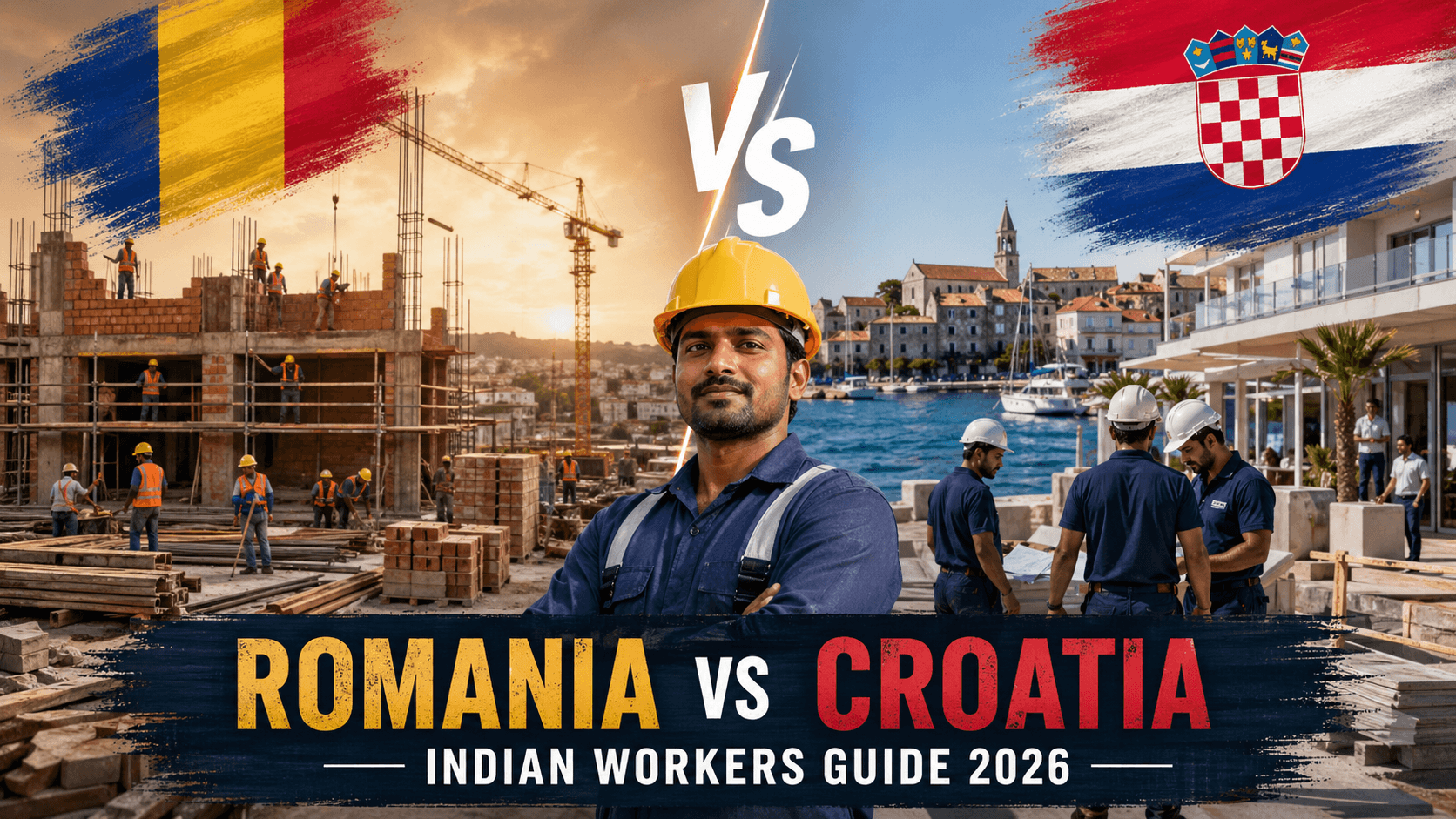
Romania vs Croatia for Indian Workers: Which EU Country to Choose in 2026?
Category: Europe Jobs Author: Shiva Travel & Manpower Consultants Read Time: 8 min read Slug: romania-vs-croatia-indian-workers-2026 Meta Description: Romania vs Croatia — which EU country is better for Indian workers in 2026? Compare salaries, visa process, job types, and savings potential. Honest guide by Shiva Travel & Manpower Consultants, Nakodar.
Both Romania and Croatia are EU member states actively hiring Indian workers — but they are very different destinations. Salaries differ. Visa processing times differ. The type of work available differs. If you are sitting in Punjab trying to decide which country to go to, this guide will give you a straight, honest comparison so you can make the right call.
At Shiva Travel & Manpower Consultants, we have placed workers in both countries. This guide is based on real ground experience — not just copied information from the internet.
Romania vs Croatia at a Glance
| Factor | Romania | Croatia |
|---|---|---|
| EU Member Since | 2007 | 2013 |
| Schengen Zone | ✅ Yes (joined 2024) | ✅ Yes (joined 2023) |
| Currency | Romanian Leu (RON) | Euro (EUR) |
| Average Wage | Lower | Slightly Higher |
| Cost of Living | Lower | Moderate |
| Visa Processing Time | 45–75 days | 60–90 days |
| English Usage | Limited | Limited |
| Indian Worker Demand | Very High | High |
| Family Visa Later | Yes (after 1 year) | Yes (after 1 year) |
Jobs Available in Romania for Indian Workers
Romania has one of the highest labour shortages in Europe right now. The country is heavily dependent on foreign workers, especially for blue-collar roles.
High-Demand Sectors:
- Construction — Masons, carpenters, steel fixers, shuttering workers, tile fitters, plumbers
- Manufacturing — Factory workers, machine operators, assembly line workers
- Agriculture — Farm workers, greenhouse workers, vegetable and fruit harvesting
- Meat Processing — One of Romania's biggest employers of Indian workers
- Textile & Garments — Factory roles, especially in cities like Cluj and Timișoara
- Transport — Truck drivers (with valid licence)
Jobs Available in Croatia for Indian Workers
Croatia's demand is more concentrated in specific sectors driven by tourism and construction.
High-Demand Sectors:
- Construction — Masons, welders, electricians, painters, scaffolders
- Tourism & Hospitality — Hotel staff, kitchen helpers, housekeeping, restaurant workers
- Agriculture — Seasonal farm work, fruit picking
- Manufacturing — Factory and packaging roles
- Shipping & Ports — Limited but available for skilled workers
Salary Comparison: Romania vs Croatia
| Role | Romania (Monthly) | Croatia (Monthly) |
|---|---|---|
| Construction Worker | €700 – €1,100 | €800 – €1,300 |
| Factory Worker | €600 – €900 | €700 – €1,000 |
| Agricultural Worker | €500 – €800 | €600 – €900 |
| Welder / Skilled Trade | €900 – €1,400 | €900 – €1,500 |
| Hospitality Staff | €600 – €900 | €700 – €1,100 |
| Driver | €800 – €1,200 | €800 – €1,200 |
Important: Romania pays in RON (Romanian Leu), not Euros — but most contracts quote Euro-equivalent. Croatia uses the Euro directly. After accounting for the lower cost of living in Romania, your actual savings potential can be similar or even better in Romania compared to Croatia.
Visa Process: Romania
Step 1: Job Offer A Romanian employer issues a confirmed employment contract through a licensed Indian recruitment agency.
Step 2: Work Permit The employer applies for a work authorization (Aviz de angajare) at the Romanian Immigration Authority (IGI). This is employer-driven — you do not apply yourself.
Step 3: Document Preparation You arrange: valid passport, police clearance certificate (PCC), medical fitness certificate, educational/experience documents. Some documents require apostille.
Step 4: Visa Application Apply at the Romanian Embassy in New Delhi or the consulate in Mumbai. Biometrics and a brief interview may be required.
Step 5: Visa Approval & Travel Once the long-stay work visa (Type D) is stamped, you travel to Romania. Upon arrival, you register at the local immigration office within 90 days.
⏱ Total Processing Time: 45–75 days (one of the fastest in the EU)
Visa Process: Croatia
Step 1: Job Offer A Croatian employer issues an employment contract through a licensed agency in India.
Step 2: Work & Residence Permit The employer applies at the Croatian Ministry of Interior. This step alone can take 30–45 days.
Step 3: Document Preparation Similar documents: passport, PCC, medical certificate, experience proof. Croatian authorities may require translation of documents into Croatian language (certified translator).
Step 4: Visa Application Apply at the Croatian Embassy in New Delhi or VFS Global centre. Biometrics and interview required.
Step 5: Approval & Travel Visa is stamped. After arrival, residence registration is completed in person.
⏱ Total Processing Time: 60–90 days (slightly longer than Romania)
Cost of Living Comparison
| Expense | Romania | Croatia |
|---|---|---|
| Accommodation | Often employer-provided; if not, €150–€250/month | Often employer-provided; if not, €200–€350/month |
| Food (self-cooked) | €100–€150/month | €150–€200/month |
| Transport | Low — good public bus/train network | Moderate — cities have decent transport |
| SIM Card + Data | Very affordable | Slightly higher |
| Overall | More affordable | Moderate |
Romania's lower cost of living means more money sent home each month, even if the gross salary appears slightly lower.
Which Country is Better? — Honest Comparison
✅ Choose Romania if:
- You want faster visa processing and earlier departure
- You are going for factory, manufacturing, or meat processing roles
- You want lower day-to-day expenses and higher savings
- You prefer a country with a very large Indian worker community already established
- You are open to cities like Bucharest, Cluj, Timișoara, Ploiești
✅ Choose Croatia if:
- You have experience in construction or skilled trades (higher wages for skilled workers)
- You want to work in tourism and hospitality (seasonal but well-paying)
- You prefer a coastal European environment (high quality of life)
- You are looking at long-term EU settlement paths
- You are comfortable with a slightly longer processing timeline
Common Requirements for Both Countries
- Valid Indian passport (minimum 12–18 months validity remaining)
- Clean police clearance certificate (PCC from local police)
- Medical fitness certificate (from government hospital)
- 1–3 years of relevant work experience (preferred)
- Age: 21–45 years (varies by employer)
- Basic English communication skills
- E-Migrate clearance (required for ECR passport holders)
What About Family Visa?
In both Romania and Croatia, after completing 1 year of legal employment, you can apply to bring your spouse and children on a family reunification visa. This makes both countries strong long-term options compared to Gulf countries, where family visa rules are stricter and less worker-friendly.
One Mistake Workers Make: Choosing by Country Name Alone
Many workers ask "Romania ya Croatia jaana chahiye?" — but the right question is: what job are you going for?
If you are a welder with 5 years of experience, Croatia's construction sector may offer better pay. If you are a general factory worker or helper, Romania will likely place you faster at a comparable effective salary. At Shiva Travel, we match workers based on their actual profile — not just destination preference.
How Shiva Travel & Manpower Consultants Helps
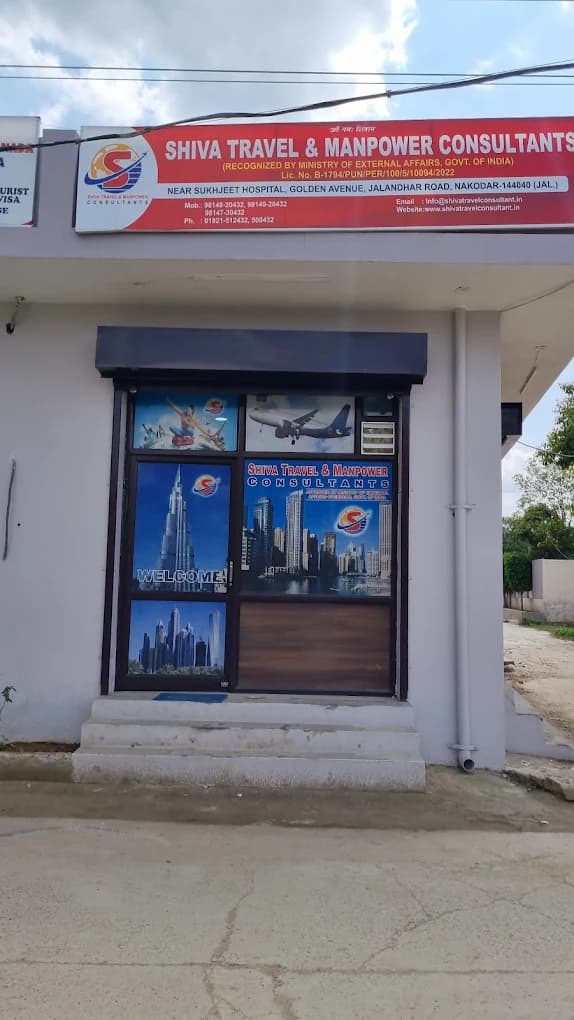
Shiva Travel & Manpower Consultants has direct employer partnerships in both Romania and Croatia across construction, manufacturing, agriculture, and hospitality sectors. As a government-licensed recruitment agency (RA License B-1794), we handle the entire process — from job matching and document preparation to visa stamping and pre-departure briefing — with transparent charges and no hidden fees.
📍 Visit us: Golden Avenue, Near Sukhjeet Hospital, Jalandhar Road, Nakodar, Punjab 144040
Have questions about Romania or Croatia jobs? WhatsApp us directly and our team will guide you based on your specific skills and experience.